


At Santa Barbara Unified School District (SBUSD), resilience is woven into its DNA. The California district serves a large population of Latino and socioeconomically disadvantaged students, alongside 11–12% of students receiving Individualized Education Programs (IEPs) and 15% who are English learners.
With this in mind, school leaders recognized that choosing the right curriculum was vital to ensure that every student has the opportunity to succeed. After the district’s previous curriculum adoption in 2007, teachers struggled with inconsistent implementation across classrooms.
Combined Efforts to Find a New Curriculum
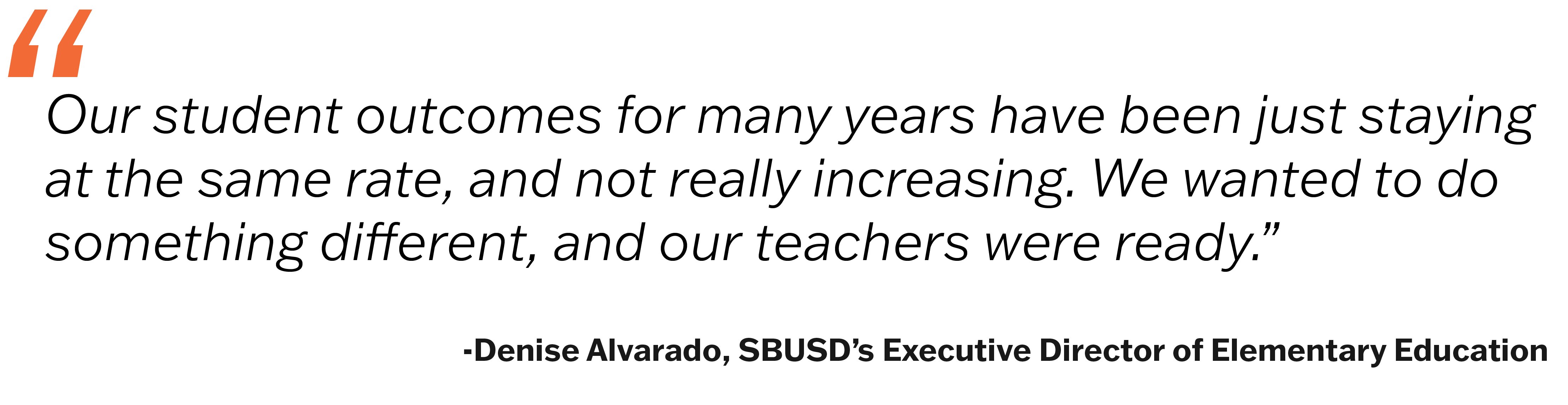
There was alignment on all fronts—both within the district and throughout the community—that literacy needed to be a priority. With generations of families and educators deeply connected to SBUSD, there was a combined effort and focus to shape the district’s future and strengthen literacy across its elementary schools.
The district created a task force that included community members and discussed student outcomes and the need for more training. Dr. Hilda Maldonado, Superintendent of SBUSD, recognized that a new curriculum would be critical in meeting these goals. As a result, Alvarado created a teacher‑led curriculum committee to guide the selection process, keeping the community informed throughout.
The curriculum committee represented a broad range of teachers. Alvarado explained: “We were able to select teachers from every school, with every grade level represented, and also experts who support students with IEPs as well as English learners.”
With the district’s diverse student perspectives and language barriers presenting learning challenges, the committee prioritized curricula that were “culturally and linguistically responsive to our students’ needs,” Alvarado said.
Finding a Fit with Wit & Wisdom TM
Together, teachers landed on two curricula to choose from—putting both to the test through hands-on reviews and classroom pilots and ultimately choosing Wit & Wisdom, a Great Minds® curriculum.
The curriculum stood out for its research-backed approach and ability to support a wide range of learners, including multilingual learners, which is exactly what SBUSD needed.
“It was aligned to the Science of Reading, which is what we wanted from both the community and our school district,” Alvarado explained. Grounded in research, Wit & Wisdom is designed with multiple learning pathways into texts and topics, helping students with different experiences and knowledge succeed.
Choosing Wit & Wisdom was a major win, but there was still work to be done before implementation. Roughly 200 elementary school teachers needed to be trained before the start of the school year. With summer break approaching, SBUSD offered educators the opportunity to participate in professional learning sessions during their time off, unsure how many would step forward.
The response was overwhelmingly positive: “85% of teachers received their training before the beginning of the school year,” Alvarado said.
Partnering with Great Minds Beyond the Curriculum
The adoption of Wit & Wisdom wasn’t a “one and done” transaction with Great Minds. The company continued the partnership with the district through regular meetings, ongoing collaboration, and support for the implementation of its three-year learning plan.
Alvarado also credited Great Minds with playing a key role in guided observations for leaders.
While Great Minds initially helped facilitate these observations, the goal was to shift leadership over time to school staff and leaders. These sessions were intended to strengthen teaching instruction for Wit & Wisdom, examining where support was needed.
“Without collaboration, this would not be possible,” Alvarado said.
Spotting Success and Challenges Through Professional Learning
SBUSD provided professional learning throughout the year and collaborated with its Teachers Association to develop a plan for “learning walks” to monitor progress and celebrate success—ensuring teachers felt confident and prepared to bring Wit & Wisdom to life in their classrooms.
The district has conducted these walks at every school and classroom, visiting over 500 classrooms annually for the past three years.
Alongside the learning walks, pacing guides were implemented to ensure consistency across the board. Over time, these tools helped shift instruction to become more coherent and consistent—providing all students with the same opportunity to access grade-level instruction across classrooms and schools.
Connecting Wit & Wisdom Outside of ELA Instruction
Through the implementation of Wit & Wisdom, the district has continued to build stronger relationships with the community by keeping them updated every step of the way. Alvarado has met with local organizations such as the Santa Barbara Public Library to connect support points outside of schools. By providing the library with lesson plans on what students in the area are learning about, the library can factor this information into their program plan.
Additionally, the district has partnered with a local arts organization to help students connect what they are learning in Wit & Wisdom to other formats and subject areas. “The organization paid for all of our third through sixth grade students to attend an Alvin Ailey American Dance Theater performance, and it created an extension for our students,” Alvarado said.
That cross-curriculum collaboration extends beyond community partnerships. According to Alvarado, the district’s arts teachers are also incorporating the ELA curriculum into their instruction and working alongside classroom teachers to deepen student learning.
The Impact of Wit & Wisdom
After three years of using Wit & Wisdom, SBUSD has seen an increase in literacy rates, even among varied demographics. Alvarado explains, “There is growth happening, not just for all of our students, but also for subgroups, such as English learners, special education students, and those who are socioeconomically disadvantaged.”
There has also been a change in student actions since the implementation of Wit & Wisdom. According to Alvarado, the curriculum “allows students to really feel that they have a variety of ways to explain their thinking.”
In classroom discussions, students are citing evidence, agreeing and disagreeing, and building on one another’s ideas as they read full texts together. Through the use of Socratic seminars, she added, “Our students have all been able to participate, no matter where they’re at in their academic outcomes.”
At Santa Barbara Unified, support and the willingness to set students up for success is everywhere—both inside and outside of the classroom. “Wit & Wisdom has really brought us together as a community and helped our students tremendously,” Alvarado said.

Great Minds
Great Minds PBC is a public benefit corporation. Teachers and content experts write Great Minds curricula, applying their experience to create materials that resonate with students, teachers, and families. Great Minds curricula include Arts & Letters™, Wit & Wisdom™, Eureka Math², PhD Science® and Geodes® books for developing readers.
Topics: Literacy Case Study

Get the Latest Great Minds Updates
Stay informed of simple yet crucial implementation support tips, curriculum updates, new resources, professional development opportunities, and more for math, science, and ELA.
