
Fluency in arithmetic operations and automaticity with basic facts are essential for building strong mathematical foundations. Florida’s B.E.S.T. Math Standards emphasize a progression from conceptual understanding to procedural fluency and automaticity. Similarly, Eureka Math² Florida’s approach to fluency is designed to support this progression through structured, intentional daily practice built on conceptual understanding. This alignment ensures that educators can meet state benchmarks while leveraging proven instructional strategies.
Florida B.E.S.T. Organizes Fluency Development into Three Stages
Stage 1: Exploration
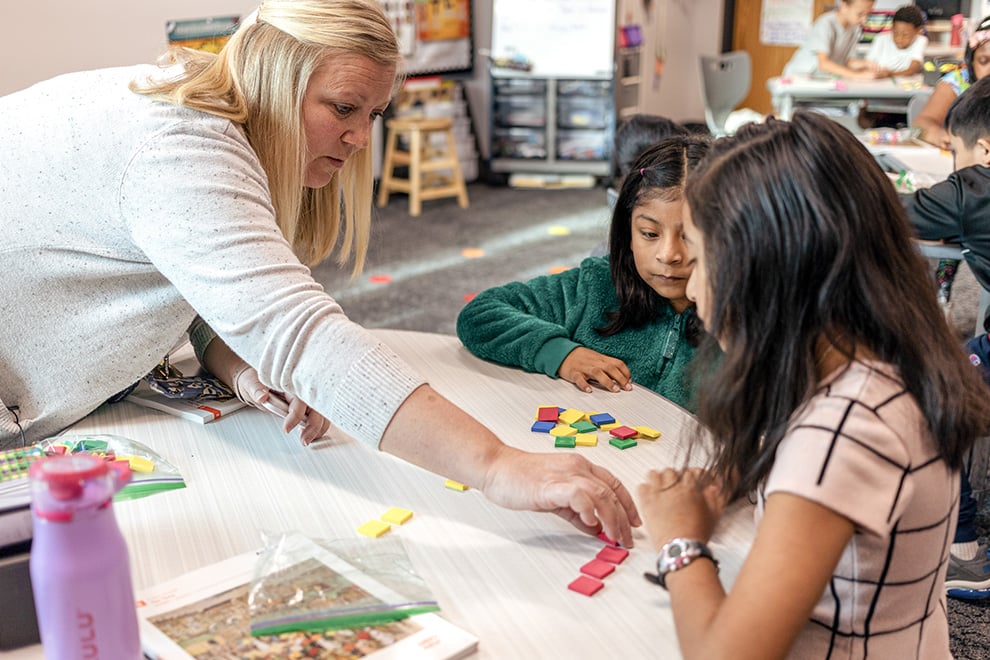
Florida’s B.E.S.T. Standards emphasize that students should use manipulatives, visual models, and estimation to develop conceptual understanding. Instruction focuses on combining and decomposing numbers, using number lines, and drawing representations. This stage is about helping students make sense of math before moving to procedural reliability.
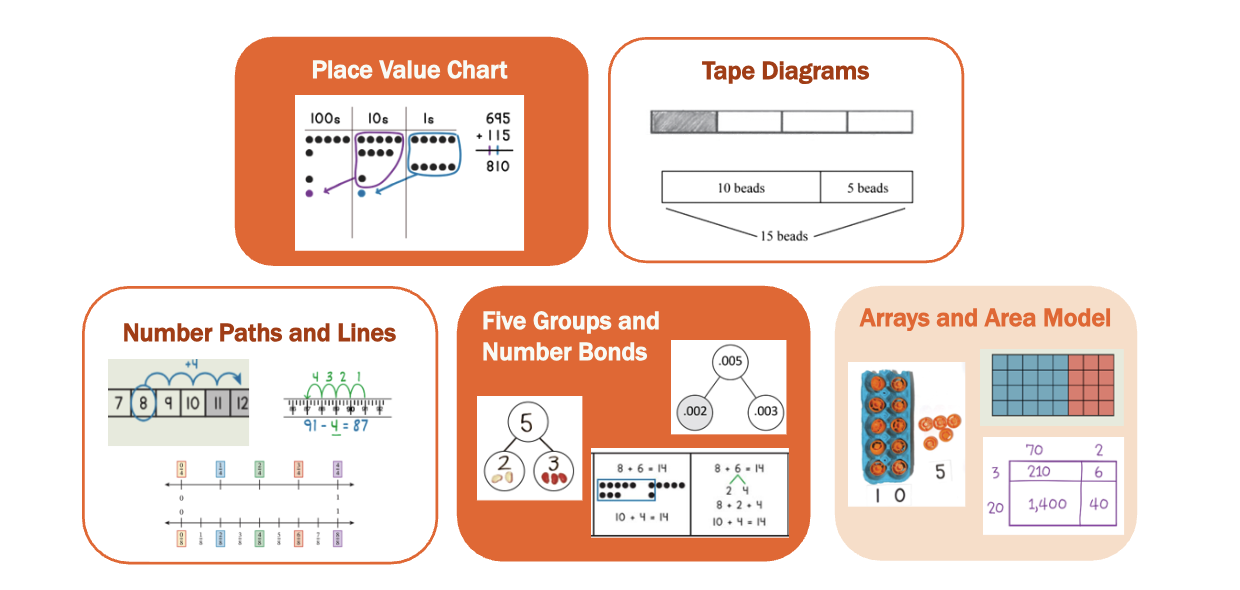
Eureka Math² Florida reinforces this philosophy by prioritizing conceptual understanding over rote memorization. When students only memorize procedures, they struggle to extend learning to new contexts. Eureka Math² Florida addresses this by ensuring students see math as a connected system of ideas, which improves retention and application. Eureka Math² Florida utilizes both concrete and pictorial representation of mathematics before moving to abstract understanding throughout the entire curriculum.
Stage 2: Procedural Reliability
Florida’s B.E.S.T. Standards describe this stage as the transition from exploration to reliable methods for computation. Students learn strategies that produce accurate results consistently, such as using number lines or “jumping up” techniques. The goal is to help students select and apply methods they can trust.
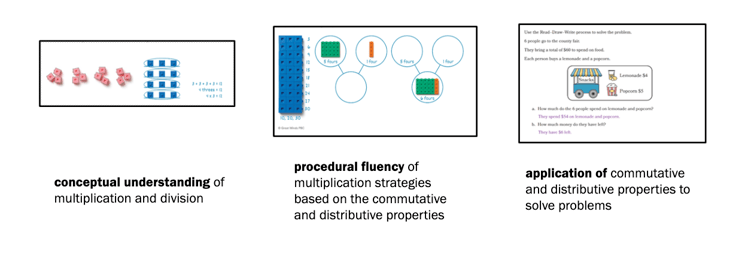
Eureka Math² Florida supports this stage through its CRA (Concrete–Representational–Abstract) learning sequence, a research-based approach that builds deep understanding and procedural reliability:
-
Concrete: Students begin by manipulating physical objects, such as counters or base-ten blocks, to model operations.
-
Representational: They progress to drawing pictures or diagrams, like number lines or tape diagrams, to visualize relationships.
-
Abstract: Finally, students use symbols and numbers to solve problems efficiently.
This progression ensures that students don’t just memorize steps, they understand why methods work. By moving through CRA, students develop strategies that are accurate, flexible, and transferable. Students utilize various strategies (arrays, number lines, area models, etc.) to produce accurate results consistently. Students also have the choice to use their desired model to solve problems.
Stage 3: Procedural Fluency & Automaticity
Florida B.E.S.T calls for students to use efficient algorithms and recall basic facts from memory, enabling quick and accurate responses. This automaticity reduces cognitive load, allowing students to focus on higher-level problem-solving rather than basic calculations.
Eureka Math² Florida reinforces this through interleaved practice, a research-based approach that mixes new concepts with previously learned material throughout the curriculum. This spaced practice strengthens retention and ensures that skills remain accessible over time, supporting both procedural reliability and long-term mastery.
Eureka Math² Florida’s Fluency Program Overview
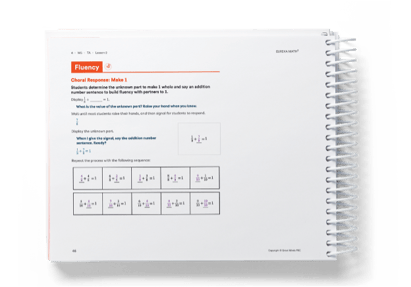
-
Structured Fluency Activities
Each lesson begins with 15 minutes of engaging fluency activities. Activities progress from simple to complex, reinforcing previously learned skills while introducing new ones. -
Distributed and Interleaved Practice
Practice is spaced over time and mixed with different problem types to strengthen retention and adaptability.
-
Immediate Application
Students apply new concepts in problem sets right after instruction, ensuring understanding before moving to fluency. -
Discourse Rich Routines
Fluency activities are designed for students to internalize strategies and facts, while also incorporating small group and whole class conversations.