Math Manipulatives: A Student-Centered Approach to Teaching Mathematics

Eureka Math2 Florida > Resources > Math Manipulatives: A Student-Centered Approach to Teaching Mathematics
Meaningful Built-In Tools for Deeper Learning
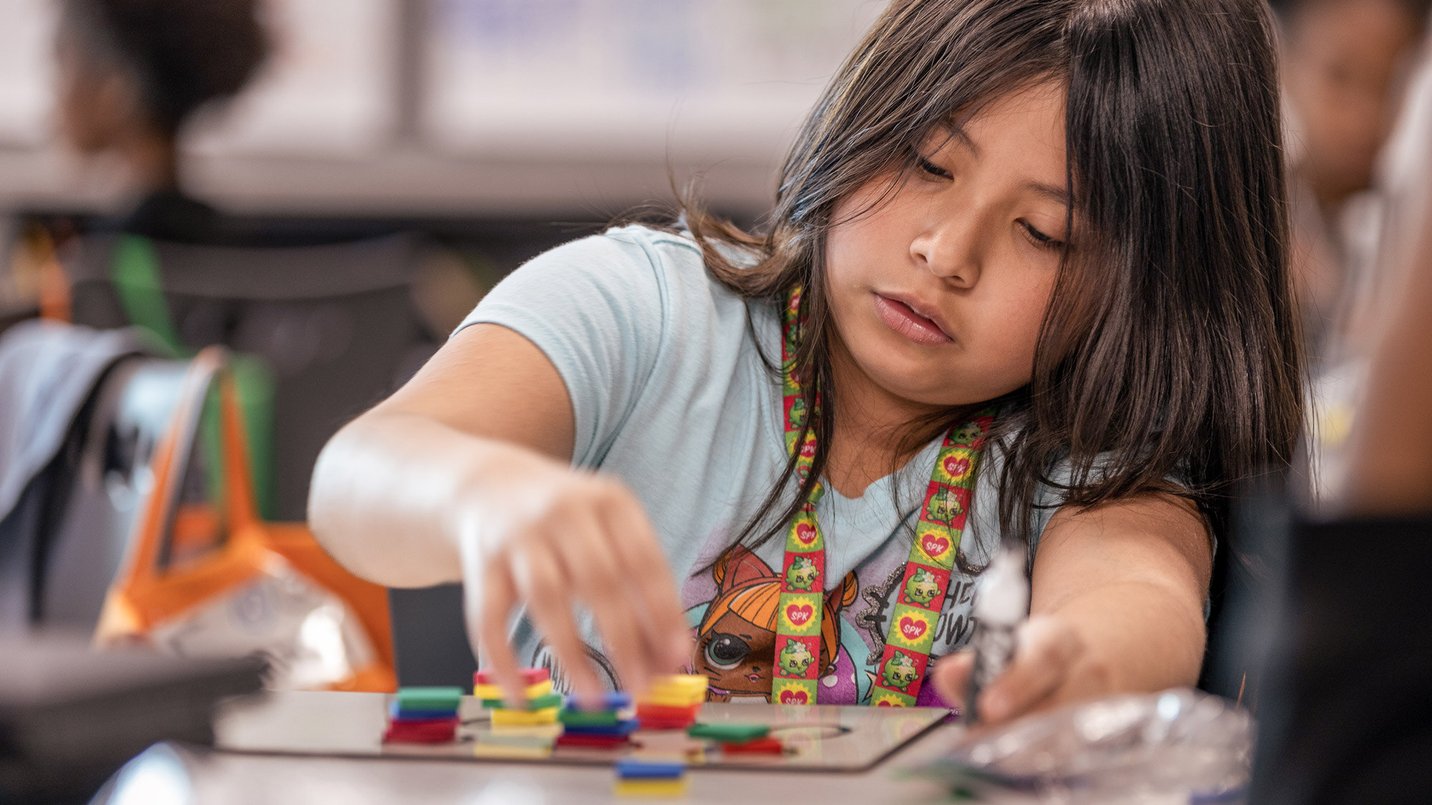
Manipulatives have long been an essential part of mathematics instructional programs. Why? Because research shows that the consistent and appropriate use of manipulatives increases student engagement and understanding of key mathematics concepts (Dinsmoor 2022; Hand2Mind n.d.). Manipulatives increase student engagement and provide an entry point into abstract concepts by serving as a concrete model of the math concept. This model can be called upon later as students continue to practice and develop the skills connected to this learning. When students represent a math concept with a physical manipulative, they better understand the concept.
"In a comprehensive review of mathematics education research, the National Research Council (2001) concluded “the evidence indicates, in short, that manipulatives can provide valuable support for student learning when teachers interact over time with the students to help them build links between the object, the symbol, and the mathematical idea both represent."
Research also shows that concrete objects can help children access math concepts and processes that might otherwise be inaccessible to them (Dinsmoor 2022; Hand2Mind n.d.). For example, Gersten et al. (2009) summarized research on the use of concrete objects—both formal and informal manipulatives—with students who need additional support in mathematics. In most studies, the effect size of student math learning with manipulative use was significantly larger than when manipulatives were not used.
Drawing upon the research, and recognizing the impact that manipulatives can have on learning, the Eureka Math2® Florida writers and mathematicians have:
- integrated the use of manipulatives throughout all grade levels as part of a Concrete-Representational-Abstract (CRA) progression,
- carefully crafted learning experiences for students so they experience high-leverage models that are utilized for multiple years, and
- created unique hands-on and virtual manipulatives.
Strategically Scaffolded Learning
To develop the conceptual understanding needed for future success, students need access to a wide array of tools that help them grasp, integrate, and internalize mathematical concepts. Multiple representations of concepts, when blended into a deliberate sequence—like the Concrete-Representational-Abstract (CRA) progression recommended by the research—are an effective way to lead students to a richer understanding of abstract concepts (Dinsmoor 2022; Hand2Mind n.d.). The CRA approach is a critical instructional design element of Eureka Math2 Florida that facilitates deep learning and works best when strong attention is directed at developing student understanding in the concrete and representational stages. Here is an example of a CRA progression in Eureka Math2 Florida:
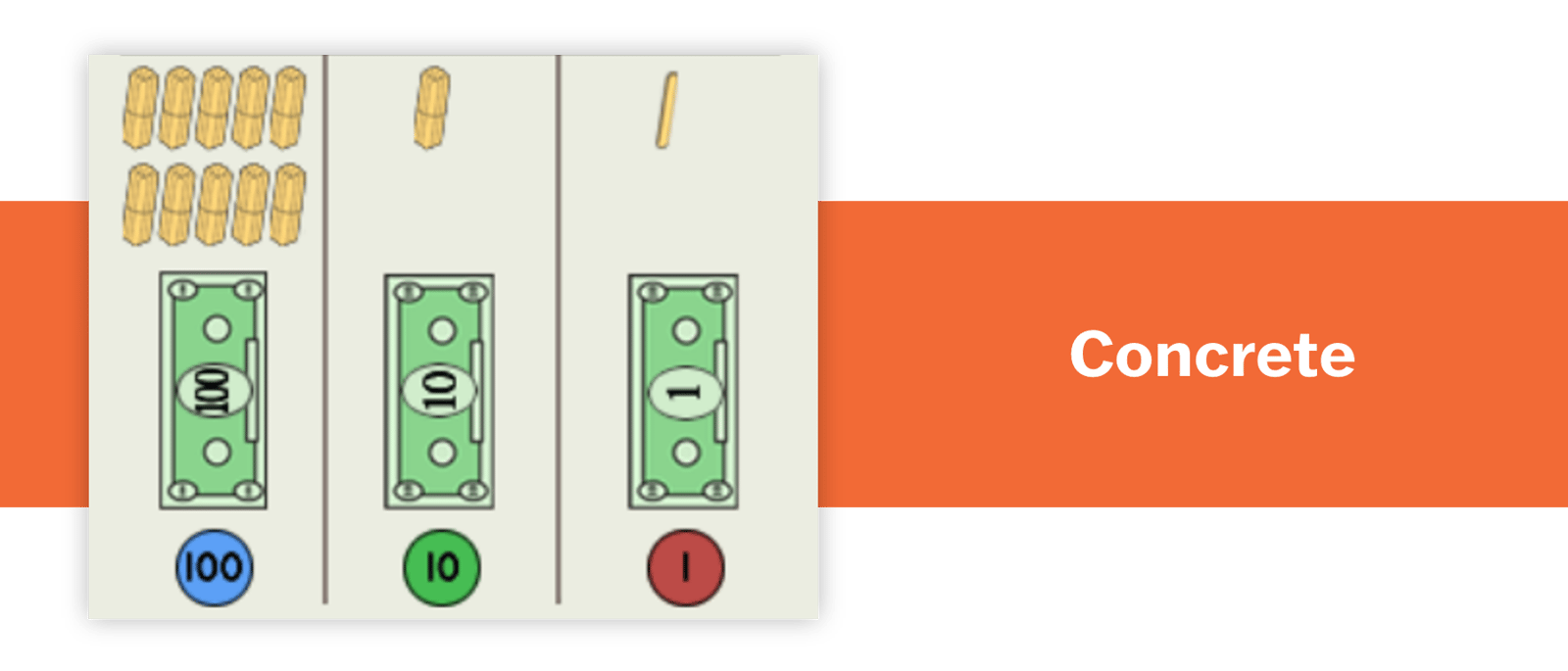
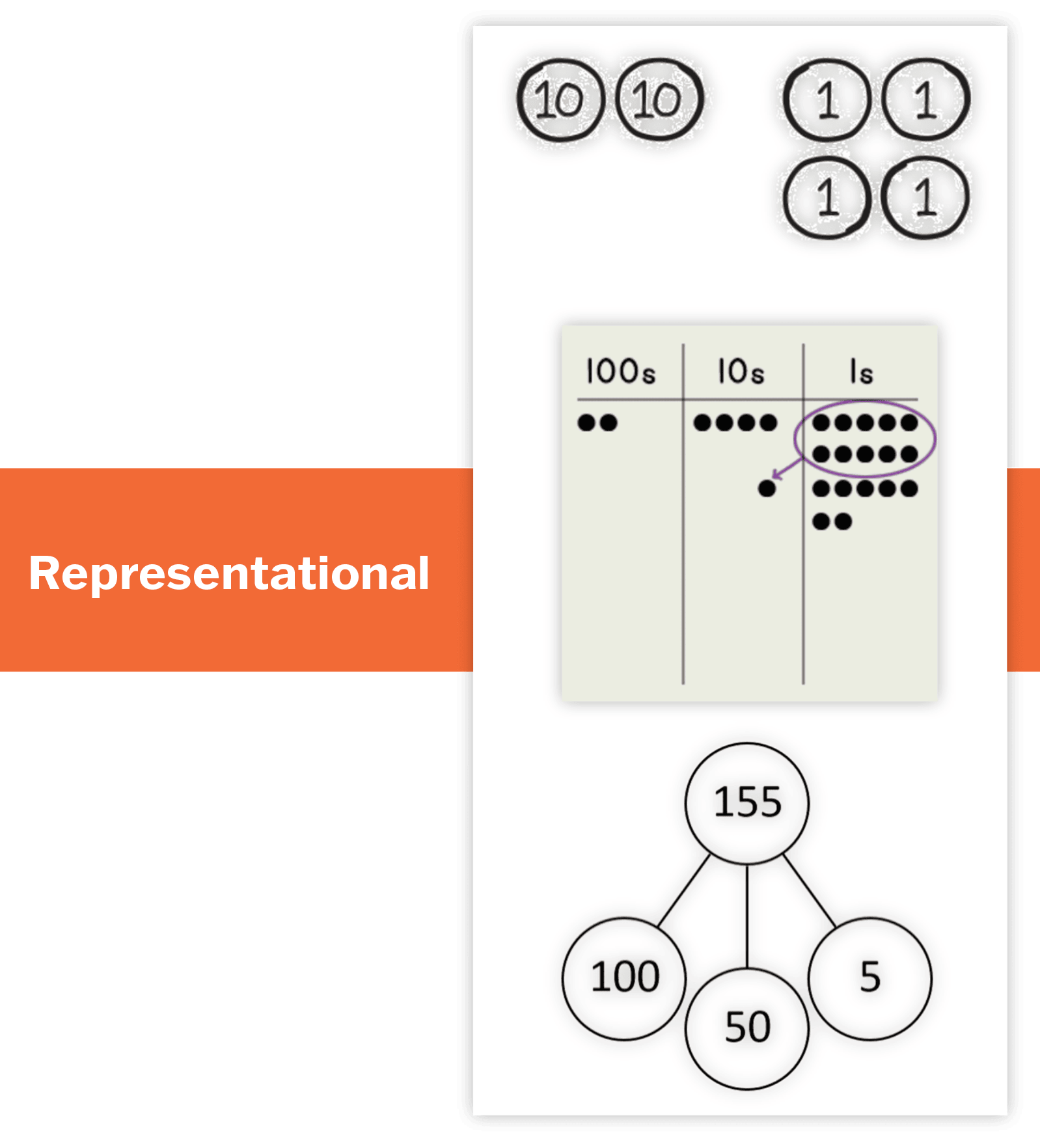
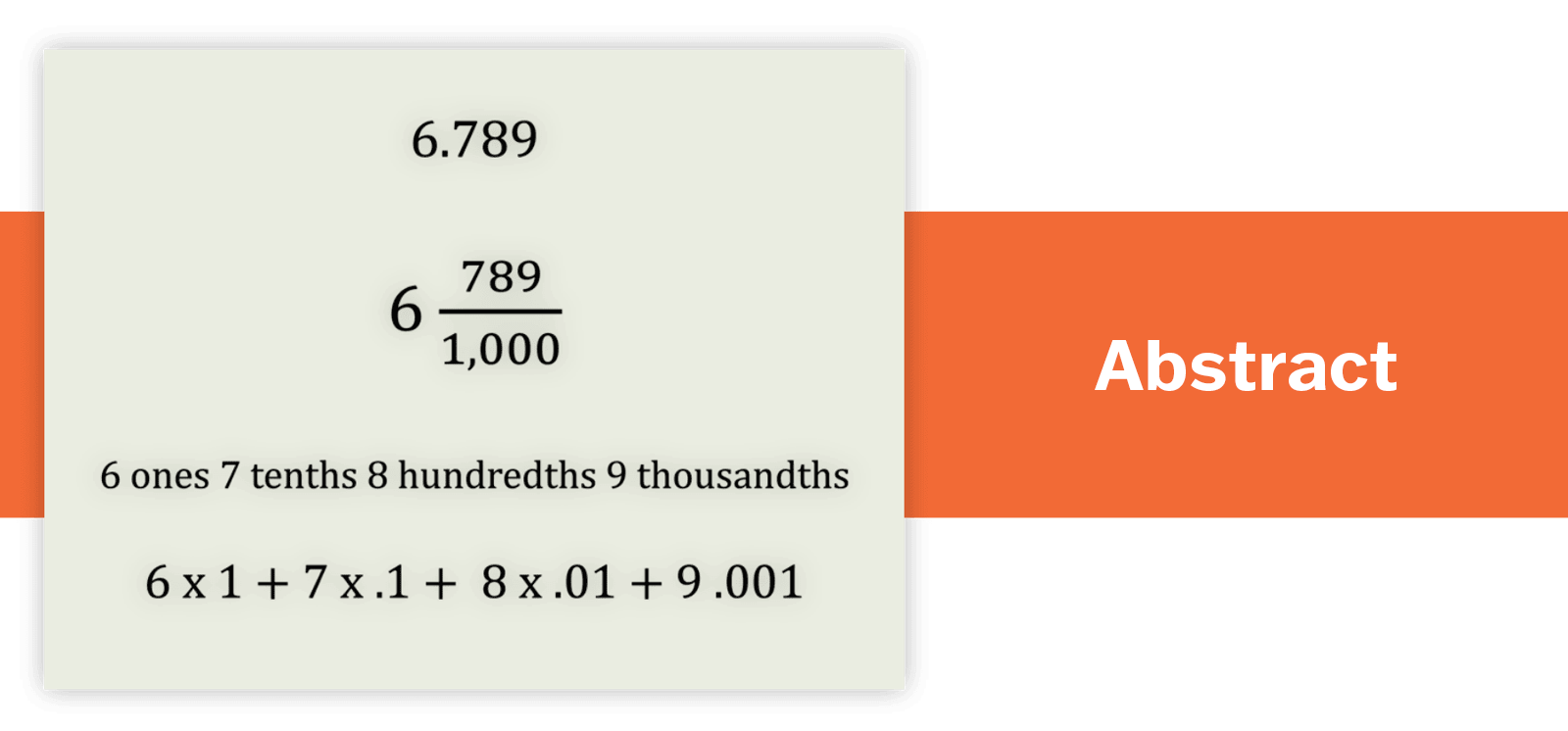
Purposeful exploration of math concepts using tangible, hands-on objects like pattern blocks, tiles, and cubes is a vital first step to building conceptual understanding. As students become more comfortable with the concepts and skills being taught, they transition toward visualizing and drawing the concept using pictures. Then, in a continued and intentional progression that occurs within and across modules and levels, students demonstrate their understanding of the concept using the symbolic notation of numerals and symbols.
What sets Eureka Math2 Florida apart is its intentional approach to connecting each stage of the CRA progression through modeling and guided practice. As students move from concrete to representational to abstract, they build a clear understanding of how each stage relates to the next — developing the confidence and conceptual clarity needed to engage with increasingly rigorous mathematical concepts. The curriculum also overlaps the stages to help students build familiarity with the next stage in the progression, even when they are primarily focused on an earlier one. Finally, the CRA instructional approach in Eureka Math2 Florida offers explicit scaffolding opportunities, enabling teachers to move students effectively back to earlier stages as needed so students can successfully access more advanced learning.
This exposure to various mathematical tools, along with intentional guidance and scaffolding, ultimately helps students gain an understanding of why and how manipulatives and other tools aid their problem-solving processes, and students develop the ability to select the appropriate tools for their learning and application of mathematical concepts.
A Coherent Progression of Models
Manipulatives can be a part of a coherent set of concrete representations that students can draw on throughout grade levels. These concrete representations help build background knowledge in a way that activates students’ memory and emphasizes how the same math concepts can apply to new, more complex units. Many models used in Grade Levels K–5 evolve along with the growing complexities of mathematics, building a strong foundation for future learning. For example:
-
The number path is an early linear model representing whole numbers. This model evolves into using number lines to represent a more extensive variety of number types, including fractions and decimals.
-
Place value disks and place value charts are used starting in Grade Level 2 and through Grade Level 5 to model numbers and to compute with understanding.
-
Centimeter cubes are used across the levels, starting in Grade Level K.
Thoughtfully Developed Tools
Our teacher–writers and mathematicians embedded engaging, hands-on, concrete models into the Eureka Math2 Florida curriculum. When the right tool to represent the concept didn’t exist, they created it.
In Grade Level 2 Module 1, students are introduced to meter sticks and measuring tapes as tools to explore metric measurement and the beginning concepts of place value. The Eureka Math2 Florida exclusive Double-Sided Meter Sticks and Measuring Tapes are specifically designed to be used as a concrete model throughout Grade Level 2.
When teachers purchase the manipulatives kits for their grade level, they utilize the tools exactly as the expert teacher–writers intended. In addition, having these vital tools at the point of use means teachers can spend less time prepping and more time intentionally planning.
Built-In Support for Educators
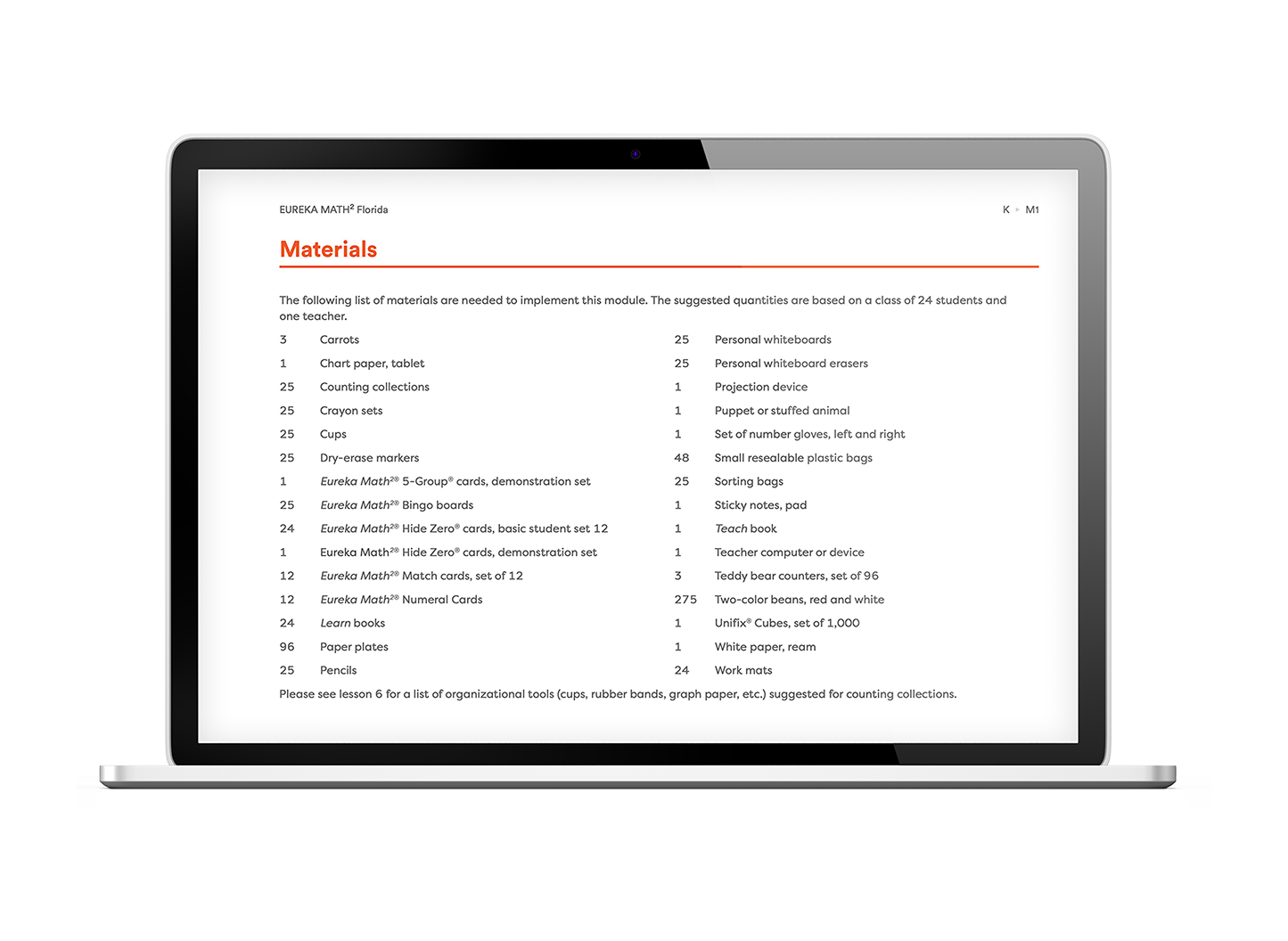
Manipulatives kits are available for each grade level of Eureka Math2 Florida. There are also virtual versions of many (but not all) of the manipulatives that can be displayed to the class. To ease instructional planning and delivery, all the materials needed for instruction can always be found in the Module Overview for each module on the Great Minds® Digital Platform. (Explore the platform with free demo access.)
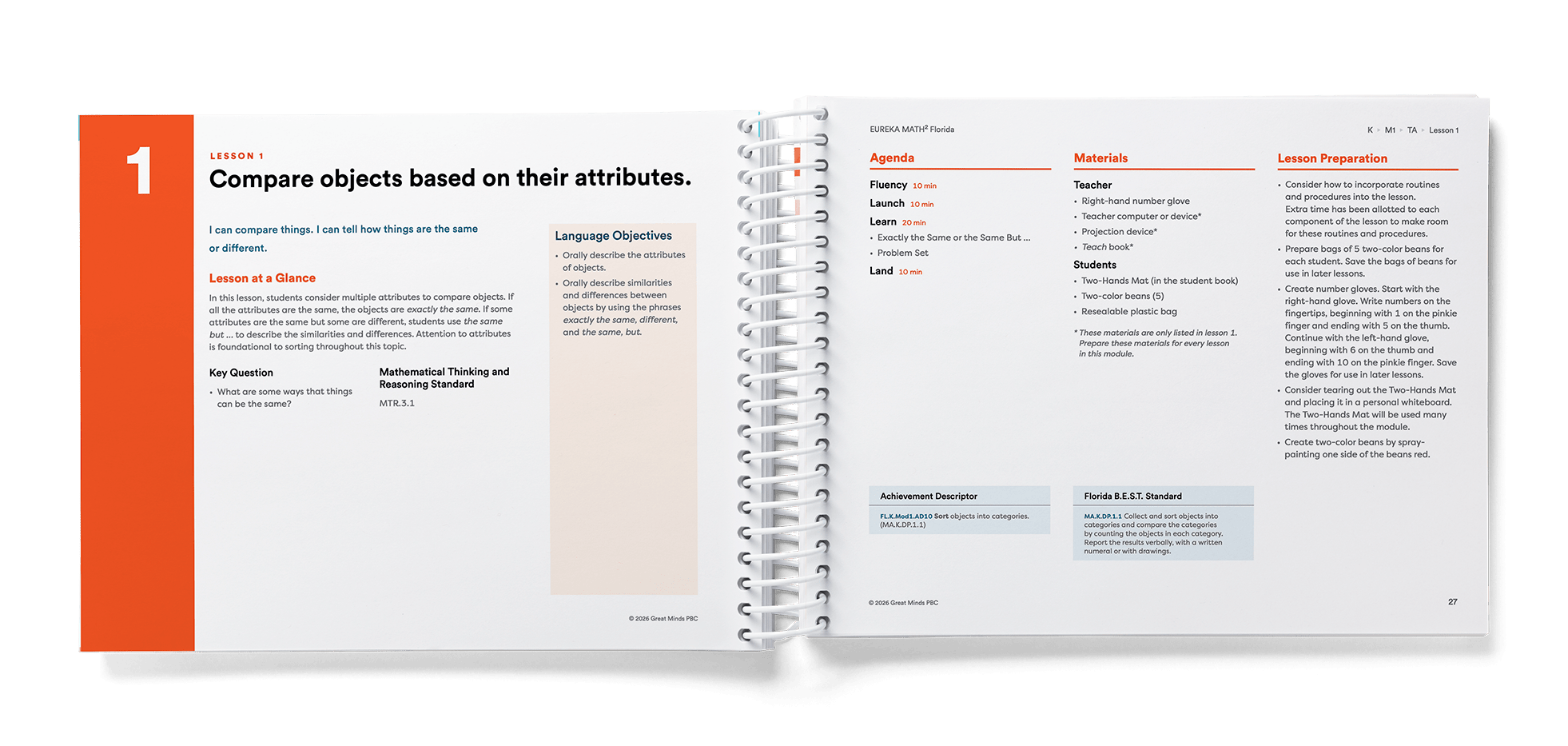
In the Teach teacher edition book, a materials list can be found at the start of each lesson.
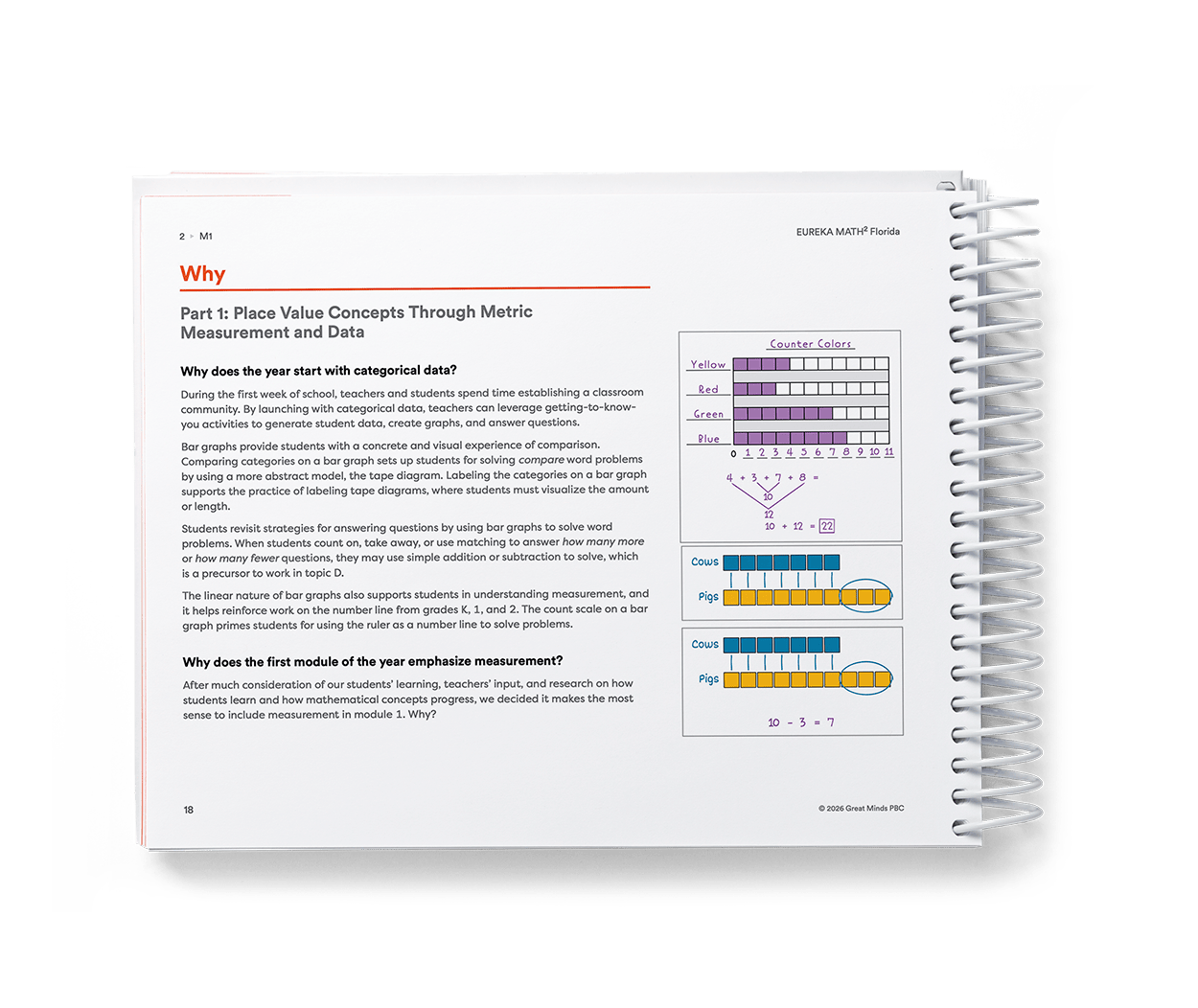
Since teachers are key to helping students use manipulatives successfully, the Eureka Math2 Florida writers also share insights into the design of certain manipulative activities in the “Why” section of each module to support teacher understanding. You can see an example of this feature below from the Grade Level 2 Module 1 Module Overview.
Dinsmoor, K. 2022. "Math Manipulatives." In S. L. Mason (Ed.), Student-Centered Approaches in K–12 and Higher Education. EdTech Books. https://edtechbooks.org/student_centered/math_manipulatives.
Gersten, R., Beckmann, S., Clarke, B., Foegen, A., Marsh, L., Star, J. R., and Witzel, B. 2009. "Assisting Students Struggling with Mathematics: Response to Intervention (RtI) for Elementary and Middle Schools (NCEE 2009-4060)." Washington, DC: National Center for Education Evaluation and Regional Assistance, Institute of Education Sciences, U.S. Department of Education. http://ies.ed.gov/ncee/wwc/publications/practiceguides/.
Hand2Mind. "Research on the Benefits of Manipulatives." Accessed February 21, 2023. https://www.hand2mind.com/media/contentmanager/content/Benefits_of_Manipulatives.pdf.
National Research Council. 2001. "Adding It Up: Helping Children Learn Mathematics." Washington, DC: The National Academies Press. https://doi.org/10.17226/9822.
Continue Your Review
→ Access Instructional Materials
→ Explore the Digital Experience
Want to Learn More?
See Our Related Content.
See how consistent classroom routines simplify instruction and strengthen student learning in Florida math classrooms.
→ Watch the Webinar
Discover how clear lesson structures help Florida students take an active role in math learning.
→ Read the Article

